
Vintage logo tees are not valuable just because they’re old. That’s the myth that keeps most people from understanding what’s actually happening in this market. The real story is about scarcity meeting a growing wave of demand, fueled by music nostalgia, streetwear culture, and a generation of collectors who see graphic tees as wearable history. As secondhand fashion grows and supply stays locked in the past, prices keep climbing. This guide breaks down exactly why these tees are worth so much and how you can start collecting smarter.
Table of Contents
Key Takeaways
| Point | Details |
|---|---|
| Scarcity boosts value | Limited supply and rising demand are the key drivers behind high prices for vintage logo tees. |
| Culture matters | Band, brand, and streetwear movements give logo tees iconic status that collectors crave. |
| Design impacts collectibility | Logo changes and unique graphics can make a tee more rare and valuable. |
| Condition is crucial | Well-preserved tees fetch higher prices and attract serious collectors. |
| Streetwear community adds meaning | Beyond money, vintage logo tees represent identity, nostalgia, and personal stories in streetwear culture. |
What makes vintage logo tees valuable?
Let’s kill the age myth right now. A tee from 1987 isn’t automatically worth $500 just because it’s old. Value comes from a specific combination of factors, and understanding each one changes how you look at every tee you pick up.
Supply is the foundation. Authentic vintage logo tees were produced in limited runs. Concert merch from a 1994 tour, for example, was printed for that specific run of shows and nothing more. Once those tees wore out, got lost, or ended up in landfills, the surviving pieces became genuinely rare. There’s no factory cranking out more of them. That scarcity is permanent, and it’s what separates a true vintage piece from a modern reproduction.
Demand is the engine. The collector market for vintage tees has exploded over the last decade. Streetwear culture, resale platforms, and social media have pulled in millions of new buyers who actively hunt for authentic pieces. Vintage logo tees command high prices mainly because supply is limited while demand grows over time. That gap between what exists and what people want to buy is exactly what pushes prices up.
Cultural significance is the multiplier. Not every old tee is equal. A tee tied to an iconic moment, a legendary band, or a brand that defined a generation carries cultural weight that generic shirts never will. Think about what a Nirvana Nevermind tour tee represents compared to a random 90s brand shirt. One is a piece of music history. The other is just old fabric.
Here’s what actually drives value in the vintage tee market:
-
Rarity: How many of this tee survived in good condition?
-
Cultural connection: Is it tied to a significant moment, artist, or movement?
-
Condition: Fading, cracking prints, and holes reduce value fast.
-
Authenticity: Reproductions flood the market; originals command premiums.
-
Demand: Is this tee trending right now, or is it a niche collector’s item?
“The most valuable vintage tees aren’t just old clothes. They’re artifacts from a specific cultural moment that can never be recreated, worn by people who were actually there.”
If you want to get a feel for how that retro energy translates into modern design, check out how the retro logo tee trend is showing up in today’s streetwear. Brands are pulling from vintage aesthetics because the demand for that look is real and growing. For a cleaner take on the same energy, a minimal streetwear vintage tee shows how the washed, worn-in look has become a design language all its own.
Supply, demand, and the economics of vintage tees
The vintage tee market runs on basic economics, but the numbers behind it are anything but basic. This isn’t a niche hobby anymore. It’s a serious segment of the broader fashion resale economy, and the data backs that up.
Secondhand fashion is growing, with roughly 8% of total fashion and luxury sales now attributed to secondhand, and that number is expected to hit 10% by 2030. Vintage tees sit right at the center of this shift. They’re affordable enough for new collectors to enter the market, rare enough to reward serious hunters, and culturally loaded enough to keep demand strong even when trends shift.
Here’s a breakdown of how different factors affect market value:
| Factor | Low value impact | High value impact |
|---|---|---|
| Age | Generic 90s shirt | Specific tour or event tee |
| Condition | Faded, cracked print | Crisp print, minimal wear |
| Cultural tie | Unknown brand | Iconic band, artist, or movement |
| Rarity | Mass-produced | Limited run, regional only |
| Demand | Niche interest | Trending on social media |
Pop culture moments create demand spikes that are almost impossible to predict. When a legacy artist drops a new album, releases a documentary, or gets featured in a viral moment, their vintage merch prices can jump 200 to 400 percent overnight. The same thing happens when an influencer is photographed wearing a specific tee. That single image can send collectors scrambling, and since supply is fixed, prices rise fast.
Stat callout: The secondhand fashion market is projected to grow from roughly 8% of total fashion sales to 10% by 2030, representing billions in new transactions driven largely by younger consumers who prioritize authenticity over newness.
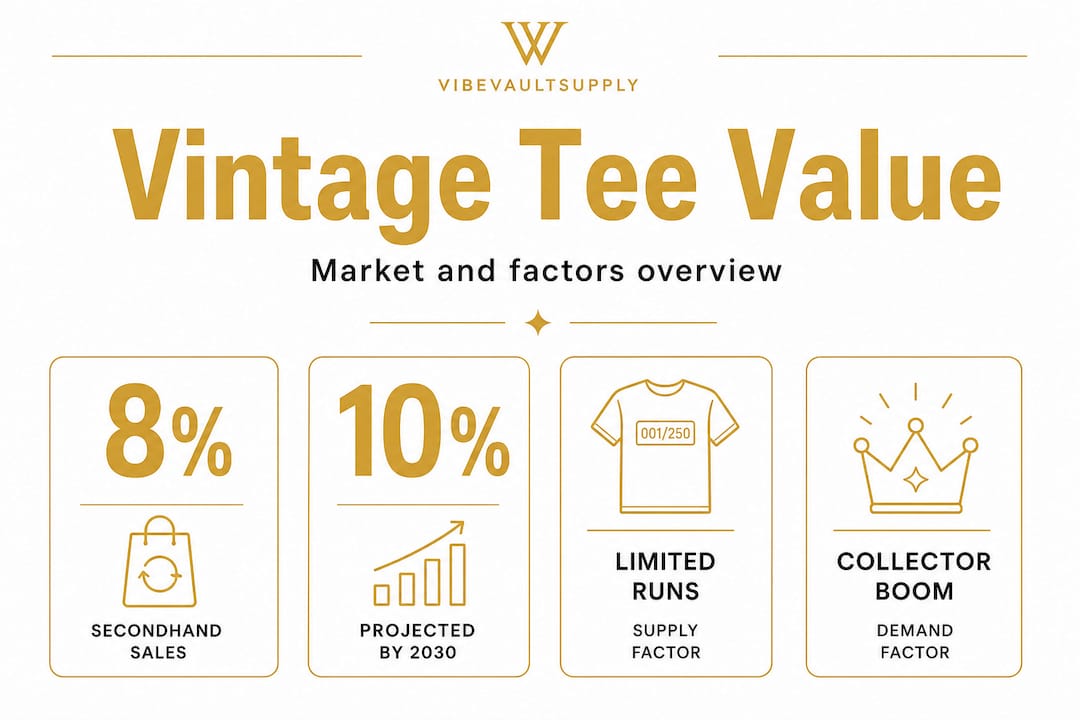
Limited releases also create artificial scarcity in the modern market. Brands that drop small quantities of graphic tees are mimicking the same dynamic that makes vintage pieces valuable. A streetwear vintage shirt released in a limited run today could become tomorrow’s collector’s item if the brand builds the right cultural story around it.
The economics are clear: when supply is capped and demand keeps growing, prices only move in one direction.
Logo evolution: How designs shape value
Not all logos are created equal, and the history of a logo matters enormously to collectors. A design that was everywhere in 1992 might be worth almost nothing today. But a logo that defined a specific subculture, got discontinued, or appeared only on a single tour run? That’s where serious money enters the picture.
Logo changes are one of the most underrated factors in vintage tee valuation. When a brand updates its logo, every tee bearing the old design becomes a timestamp. Collectors know exactly when a piece was made based on the logo version alone. That specificity adds authenticity and rarity in one move.
Here’s how different logo types compare in terms of collector value:
| Logo type | Rarity level | Typical collector demand |
|---|---|---|
| Original band/tour logo | Very high | Extremely strong |
| Discontinued brand logo | High | Strong and growing |
| Limited collab logo | High | Trend-dependent |
| Current brand logo (vintage print) | Medium | Moderate |
| Generic retro-style logo | Low | Casual buyer interest |
Print quality and age also tell a story. Vintage screen printing has a specific texture and feel that modern digital printing can’t replicate. The slight imperfections, the way the ink sits on the fabric, the cracking that happens naturally over decades, these are all markers of authenticity that trained collectors can spot immediately.
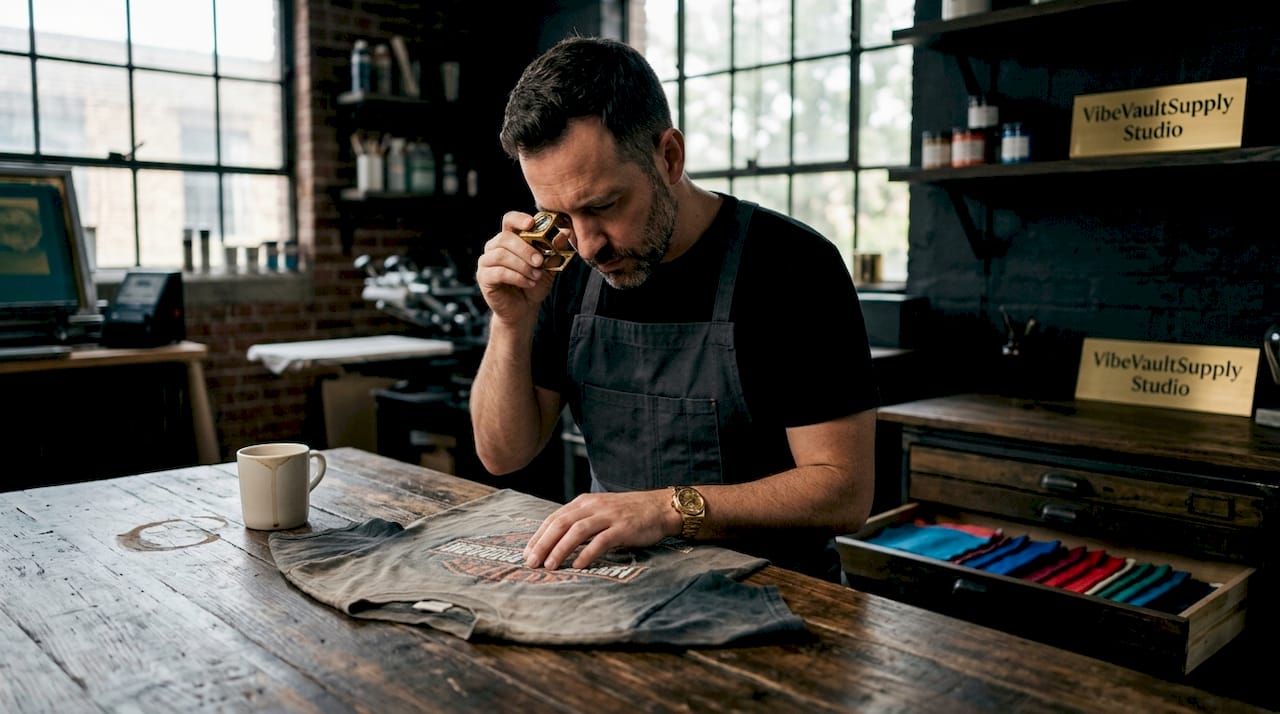
Pro Tip: Learn to recognize single-stitch construction on sleeve hems. Most vintage tees made before the mid-1990s used single-stitch finishing, which is a reliable indicator of authentic age. Modern reproductions almost always use double-stitch construction.
Condition and print quality are directly tied to value. A graphic luxury tee with a bold, well-executed design holds its appeal over time because the visual impact doesn’t fade with trends. The same principle applies to vintage pieces: a tee with a striking, well-preserved graphic will always command more than one with a washed-out or cracked print. The washed vintage shark tee is a great example of how intentional design aging, done right, captures that authentic vintage energy without sacrificing visual punch.
Vintage logo tees command high prices mainly because supply is limited while demand grows over time, but design is what separates a $50 find from a $500 grail piece.
How to spot and preserve valuable vintage logo tees
Finding a valuable vintage tee is one thing. Knowing it’s real and keeping it in good condition is where most collectors either win or lose. Here’s a practical framework for both.
Spotting authenticity: what to look for
-
Check the tag. Vintage tags have specific fonts, materials, and printing styles that changed decade by decade. A tee claiming to be from 1989 with a modern tag construction is a reproduction. Research the brand’s tag history before buying.
-
Feel the fabric. Authentic vintage tees are often made from 50/50 cotton-polyester blends or heavier single-jersey cotton. The fabric has a specific weight and softness that comes from genuine aging, not from a chemical wash treatment.
-
Examine the print. Real vintage screen prints show natural cracking and fading that follows the fabric’s texture. Fake aging looks uniform and artificial. Look for ink that sits slightly raised on the fabric surface.
-
Look at the stitching. Single-stitch sleeve hems, as mentioned earlier, are a strong authenticity marker for pre-1995 tees. Also check the collar stitching and side seams for consistency with the claimed era.
-
Research the source. Where did the tee come from? Estate sales, thrift stores in smaller cities, and private collections are more likely to yield authentic pieces than resale platforms flooded with reproductions.
-
Verify the design details. Cross-reference the specific logo, color palette, and design layout against known authentic examples. Collector communities and dedicated databases are invaluable here.
Preserving your collection
Vintage logo tees command high prices partly because so few have survived in good condition. Proper care is what keeps your pieces valuable over time.
Wash as rarely as possible. Spot-clean when you can. When washing is necessary, turn the tee inside out, use cold water, and choose the gentlest cycle available. Avoid modern enzyme-based detergents, which can break down vintage print inks faster than normal wear.
Store your tees flat or rolled, never on hangers. Hanging stretches the collar and shoulder seams over time, which is irreversible on delicate vintage fabric. Keep them away from direct sunlight and humidity, both of which accelerate fading and fabric degradation.
Pro Tip: For your most valuable pieces, consider archival tissue paper and acid-free storage boxes. Museums use these methods to preserve textile artifacts, and the same logic applies to a rare tee worth hundreds of dollars.
A monochrome streetwear tee with a clean, bold graphic is also a great everyday alternative that lets you rock the aesthetic without putting wear on your most valuable vintage pieces.
Why the streetwear community values vintage logo tees differently
Here’s the take that most collector guides miss entirely: for the streetwear community, the monetary value of a vintage tee is almost secondary. Price matters when you’re buying or selling. But when you’re wearing it? The value is completely different.
A vintage tee is a signal. It tells people what you know, what you’ve experienced, and what you care about without saying a single word. Wearing a legitimate piece from a 1996 Rage Against the Machine tour isn’t about flexing a dollar amount. It’s about showing that you understand where that music came from and what it meant to a generation. That’s a different kind of currency entirely.
The streetwear community has always operated this way. Knowledge is status. Finding the rare piece, knowing its history, understanding why it matters, that’s what earns respect in collector circles. Someone who paid $800 for a tee they don’t understand is less respected than someone who found the same piece for $30 at a thrift store because they did their homework.
There’s also a deeply personal dimension to this. Vintage tees carry memories. Maybe it’s a shirt from a concert you attended, or one that belonged to someone who shaped your taste in music. That emotional connection is real and it’s not something any resale price can capture. The individuality streetwear tee captures this spirit well: the whole point is that your style tells your story, not someone else’s.
The uncomfortable truth is that the financialization of vintage tees, treating them purely as investments, actually works against the culture. When prices get driven up by speculators who don’t care about the history, it prices out the people who actually love the music, the art, and the story behind the piece. The best collectors balance both: they understand the market, but they buy what genuinely means something to them.
Explore your own vintage-inspired style
Hunting for authentic vintage pieces is a long game, but you don’t have to wait years to build a collection that feels real and personal.

At VibeVault Supply, we design graphic tees that carry the same bold energy as the vintage pieces collectors obsess over, built for people who want to stand out with intention. From the streetwear skull tee that hits with neon edge to the retro baseball tee that pulls from classic athletic aesthetics, our drops are designed for people who understand that style is a statement. Free shipping on orders over $60 makes it easy to build your look without compromise. Explore the full collection and find the piece that speaks your language.
Frequently asked questions
How do I know if a vintage logo tee is authentic?
Check original tags, stitching construction, and fabric quality. Authentic tees show genuine aging patterns in the print and fabric that reproductions can’t replicate accurately.
Why do vintage band tees sell for so much?
Band tees command high prices because supply is permanently limited and demand is constantly renewed by music nostalgia, new fans discovering legacy artists, and active collector communities.
What affects the price of a vintage logo tee the most?
Scarcity, iconic design, cultural relevance, and condition are the biggest price drivers. The secondhand fashion market growing toward 10% of total fashion sales by 2030 shows how broad demand has become across all vintage categories.
Is washing my vintage tee risky?
Yes. Frequent washing and modern detergents degrade vintage print inks faster than normal wear. Vintage tees hold value partly because so few survived in great condition, so gentle hand-washing and minimal washing frequency are essential for preservation…
Recommended
-
VVS Multicolor Retro Logo Graphic T-Shirt – Vintage Streetwear Tee | V – VibeVaultSupply
-
VVS Retro Graphic Tee | Vintage Streetwear Shirt – VibeVaultSupply
-
Rare Energy Vintage Washed T-Shirt | Minimal Streetwear Tee – VibeVaultSupply
-
VVS Shark Vintage T-Shirt | Washed Streetwear Tee – VibeVaultSupply